
Contractor Cabinet Packages in Newnan, GA
Put quantities and project requirements into a cabinet package brief.
Send my cabinet inquiry
Or call (562) 203-3232. Calls only, we do not receive text messages.
A multi-room cabinet order can become unreliable when its revisions outgrow the original list. Newnan Cabinet Journal's package guide follows a hypothetical buyer organizing a kitchen, laundry area, and vanity purchase with changes still underway. The priority is keeping the requested, quoted, approved, and received versions aligned, whether the buyer is a contractor or an owner managing the purchase.
- Independent buying guidance
- Product inquiries
- Seller availability confirmed separately
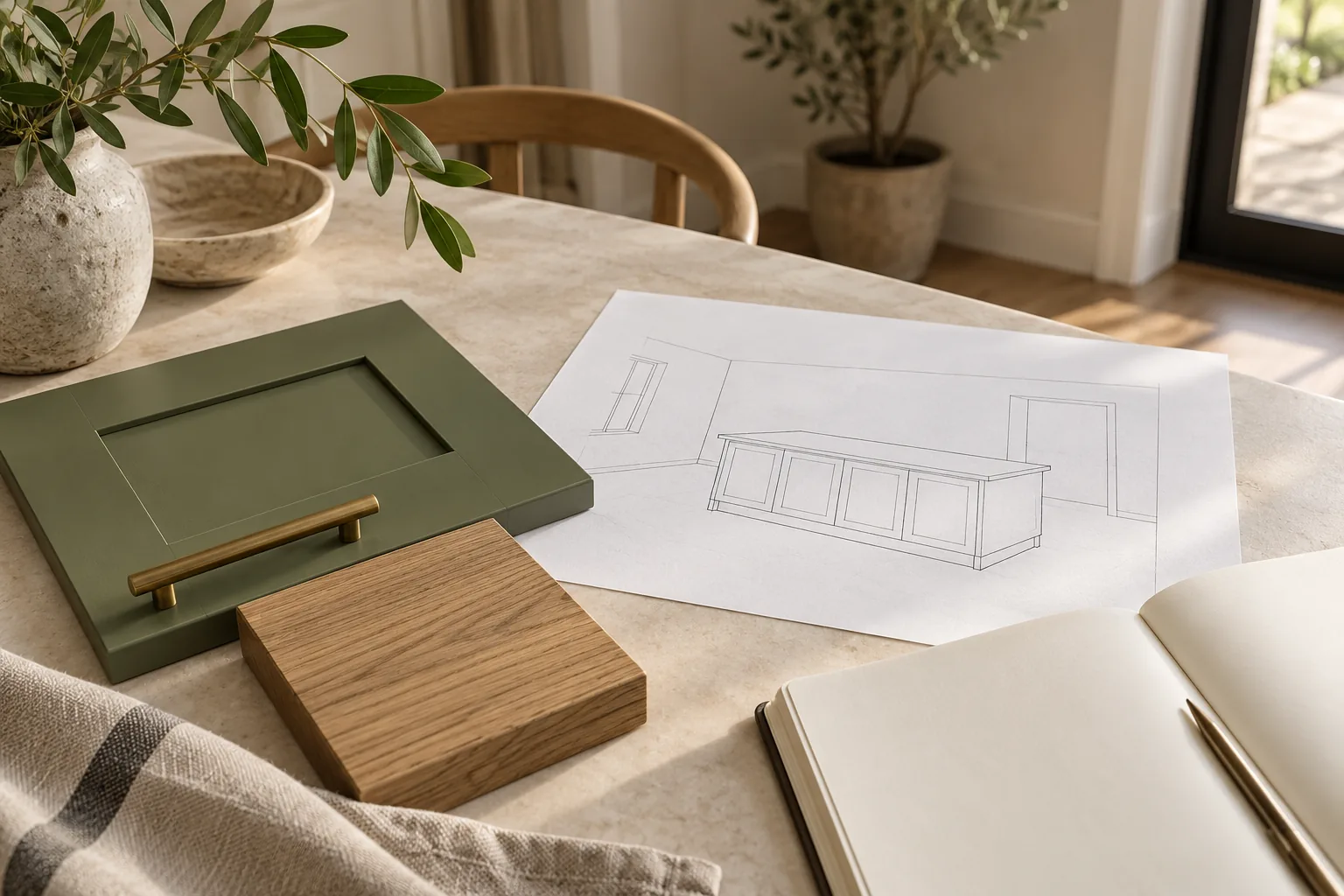
Buying questions: contractor and property cabinet packages
Use room labels and a change record to make the order understandable to each participant. This method does not establish a trade account, volume discount, or seller acceptance. The Journal's owner records and reviews inquiries about buying preparation; the actual parties must confirm the products, transaction terms, delivery phases, and work they are willing to undertake.
About Newnan Cabinet Journal
Know who handles each part
Independent cabinet buying information and quote-request service. We do not manufacture, stock or install cabinets. A referral, supplier response, appointment or purchase is not guaranteed. Product availability, delivery and installation must be confirmed directly with the seller or separately engaged contractor.
Give the order a room-based identity
Create a schedule with a recognizable room label for each group of units. Within a room, identify the unit's intended position or function along with the seller's product reference and quantity. A list of identical codes can be hard to receive when nobody knows which room gets them. The labels should connect the schedule to the relevant drawing or photograph.
In the hypothetical three-room project, the kitchen, laundry area, and bathroom each have different unresolved questions. The kitchen may be awaiting a finish decision, the laundry a unit selection, and the vanity a compatibility check. Record those states separately instead of calling the entire package ready. That makes it possible to ask a seller what can be priced provisionally and what needs more information.
Name the version and date on the schedule itself. Keep the version recognizable in the request sent to a seller and in its response. The aim is a shared purchasing reference, not an elaborate administrative system. Anyone reading the quote should be able to tell which room list the seller used.
Separate approval from a conversation about changes
A proposed revision is not an accepted revision simply because someone discussed it. Maintain a change log with the affected room, reason, proposed adjustment, and whether it has been incorporated into the current purchasing version. Questions can remain open without being mistaken for instructions to order.
Suppose the hypothetical buyer considers changing the laundry storage after the package was quoted. Ask the seller which units, accessories, or freight assumptions would change. Once a revised proposal is accepted, update the schedule and retire the earlier purchasing version. Leaving both in circulation without status labels invites someone to receive or order the wrong combination.
Identify who can authorize changes for the purchase. A person preparing drawings may explain a design option, while the buyer named on the transaction must approve the expenditure under its actual arrangement. Keep those roles explicit. The Journal does not infer contracting authority from a form entry or a contractor-package page selection.
Make substitutions a decision with consequences
Ask the seller how it proposes alternatives if a unit, finish, or accessory is unavailable. A substitute should have its own identifiable specification and a clear relationship to the original request. Similar appearance is not enough to establish equal construction, dimensions, or compatibility with adjoining pieces.
For the hypothetical vanity, a substituted unit could affect a previously checked top or plumbing arrangement. The package buyer needs that dependency flagged before approving the change. A kitchen finish substitution might affect the laundry match if the buyer intended them to coordinate. Record which other rooms or components must be reconsidered instead of treating every substitute as a standalone swap.
Keep accepted alternatives distinguishable from items merely offered for consideration. If a seller has not committed to supply the original or substitute, mark availability as unconfirmed. An organized schedule does not create inventory. It helps the buyer ask for current evidence and prevent an open choice from being treated as resolved.
Define the receiving phases without assuming storage services
Ask whether the seller can supply the package in the sequence you want and what conditions apply. A buyer may prefer one room's goods first, but a preference does not establish split-shipment availability or storage at the seller's premises. Obtain an accepted arrangement before building the project schedule around it.
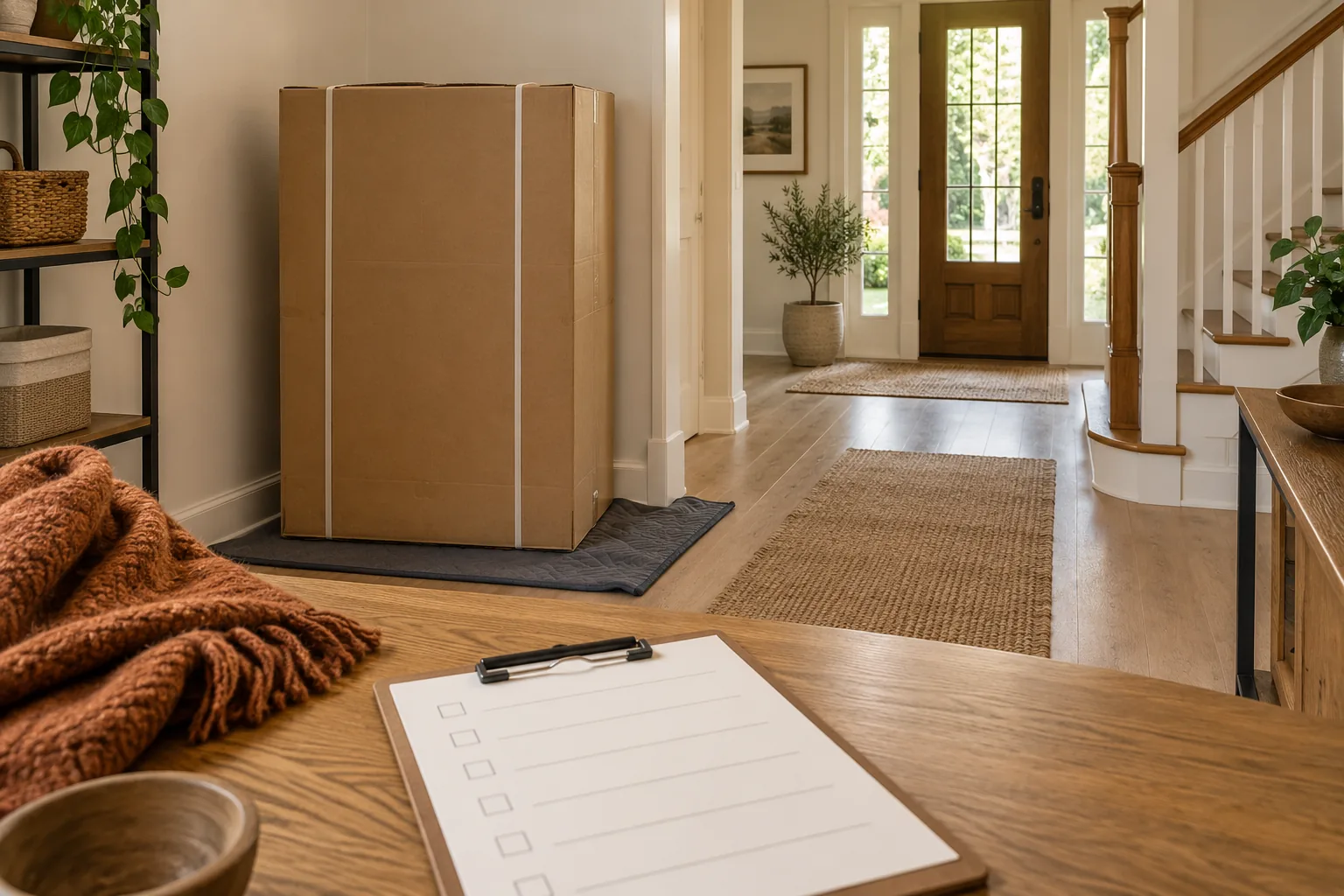
Each accepted shipment should have an identifiable expected contents list and a receiving contact. That contact needs the correct purchasing version and the seller's discrepancy instructions. If cartons are assigned to rooms, make those labels useful to the person on site. They should not have to interpret a design conversation to know whether a shipment is complete.
The hypothetical buyer may have one person receive the kitchen and another receive the vanity later. Both need consistent information about which version was accepted and where questions go. Coordinate that record with the seller's actual shipment documentation. Do not assume a carrier knows your room labels or has agreed to sort goods into rooms.

Cost estimates for a controlled three-room package
There is no verified trade price, package discount, or Newnan seller program in the source bank. Request a proposal that allows the kitchen, laundry, and vanity portions to be identified, with applicable fulfillment and other charges explained. Ask whether changing one room alters terms for the rest of the package. A large total without room-level detail can hide that effect.
For the hypothetical laundry revision, compare the current package with the proposed revised package using the same other selections. Record any related accessories and shipment changes. If a seller offers a discount subject to particular order conditions, obtain those conditions in its written proposal rather than assuming every multi-room purchase qualifies.
Three-room package estimates are subject to change with revisions, substitutions, and accepted shipment terms; the seller's written quote must identify the version, included quantities, and payable price. Separately arranged design, receiving help, or installation should be documented with the party offering it. A well-controlled schedule clarifies cost responsibility without guaranteeing a discounted outcome.
Reconcile the accepted order before the last handoff
Compare the accepted quote against the current room schedule line by line. Look for quantities, finishes, offered alternatives, and unresolved notes that should no longer be open. Ask for corrections where the seller's confirmation does not reflect the accepted decision. Do this before relying on the document as the receiving reference.
Keep the receiving record with the relevant shipment and note discrepancies using the seller's process. If a partial delivery is planned, show which units remain expected rather than treating the first arrival as an incomplete mistake. If a partial delivery was not accepted, ask the seller to explain it. The record should distinguish an agreed phase from an unexpected shortfall.
A Journal inquiry should state the package version, rooms involved, and the control problem you want reviewed. The owner receives the details for review; no contractor account or accepted supplier referral follows automatically. Any possible contact sharing requires permission, and the recipient must independently accept consideration. Purchasing authority and final supply terms stay with the actual transaction parties.
Inquiry process
From buying questions to a possible supplier quote
Sending an inquiry does not reserve products or book work.
Describe the purchase
Include project ZIP, room, approximate cabinet list and preferred timing.
Clarify requirements
Identify assembly, access, measurements and any separately arranged labor.
Confirm referral availability
An inquiry can be referred only if a suitable seller accepts the location and product request.
Review seller terms
Confirm the final drawing, itemized price, payment, delivery and return terms directly before ordering.
Illustrative product choices
Illustrative product visualizations, not completed work, local properties or supplier facilities.
Local buying information
Local inquiry guides
Questions
Contractor and Property Cabinet Packages: Common Questions
Can an owner use the package method without a contractor?
Yes, room labels and revision tracking can help any buyer organizing multiple areas. They do not establish access to trade pricing or a particular seller account. Identify the actual purchaser and ask the seller which eligibility and transaction terms apply.
When should I change the package version number?
Create a clearly identified purchasing version when a change affects what you ask a seller to quote or supply. Keep proposed changes marked as proposals until incorporated. The seller's response should name the version used so an earlier schedule cannot be mistaken for the current request.
Does the seller have to deliver rooms separately?
Split delivery is a request to resolve with that seller, not an entitlement established by a guide. Ask about accepted contents, timing, charges, and receiving responsibilities for each phase. Do not assume the seller will store the remainder while another room is prepared.
How do I handle a substitute that affects another room?
Identify the dependency and reopen the affected check before accepting the substitute. A finish, size, or interior change can affect adjoining components or coordinated selections. Update the room schedule and accepted quote together so receiving uses the combination you actually approved.
Talk to us about contractor and property cabinet packages
Describe the purchase and project ZIP in Newnan. Supplier acceptance and any referral are confirmed separately; no visit or quote is booked by this form.
Calls only, we do not receive text messages.